Dry Eye Treatment
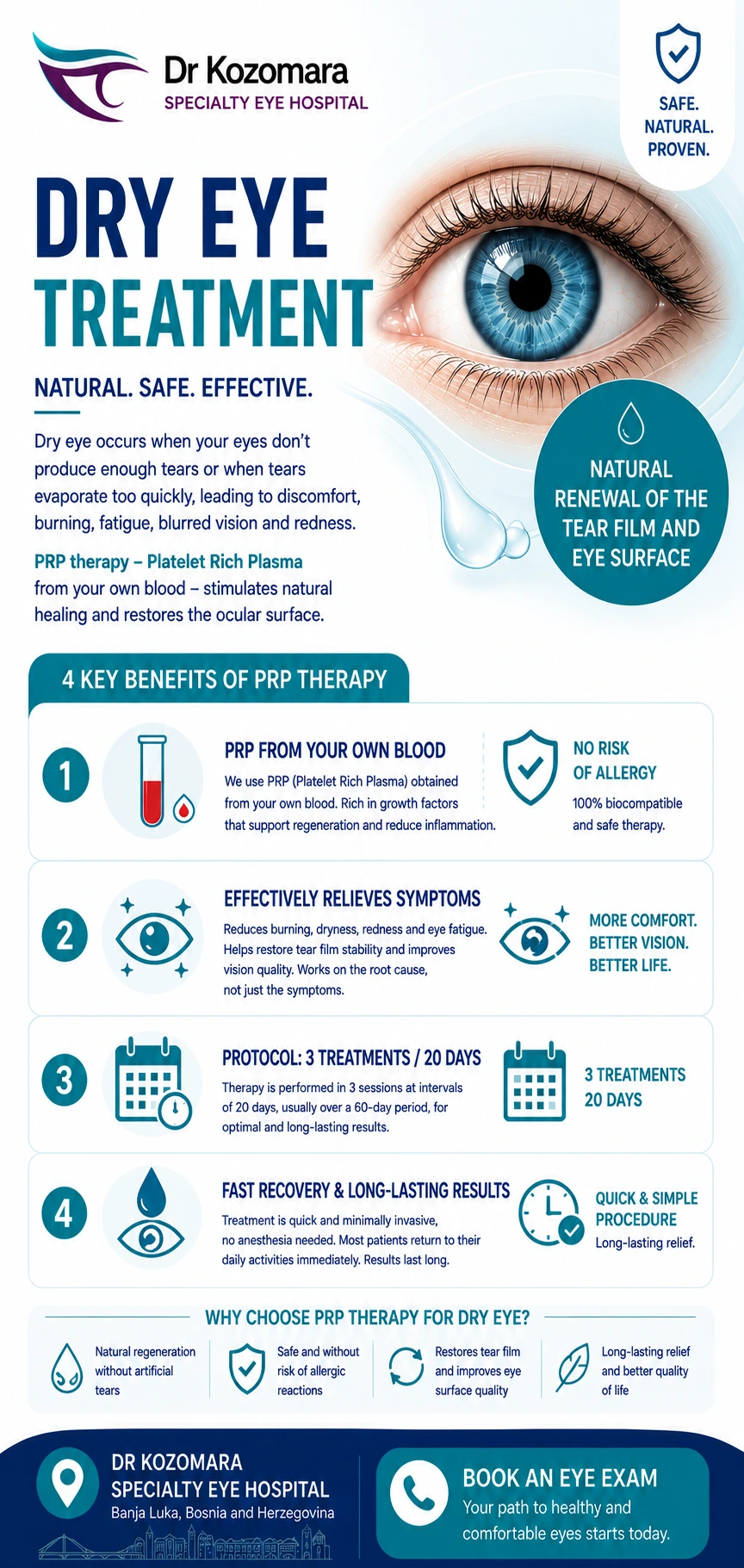
Dry eye syndrome is now recognised as a disease in its own right, not just a passing symptom. When artificial tears and standard therapy aren't enough, PRP therapy — made from the patient's own blood — offers a biological solution with no risk of allergic reaction.
Dry eye syndrome is one of the most common eye conditions today. It is increasingly recognised as a disease in its own right, not merely a passing symptom — so its treatment calls for a serious, individual approach.
Symptoms of dry eye
Stinging and a "grain" or foreign-body sensation in the eye
Redness and eye fatigue
Excessive watering (a reaction to irritation)
Occasional blurred vision
Symptoms often worsen with prolonged screen use, which places dry eye close to the digital eye strain many patients experience.
Standard therapy
In most cases dry eye is well controlled with artificial tears and appropriate medication. When these measures are not enough, we apply a more advanced, biological therapy.
PRP therapy (platelet-rich plasma)
PRP is obtained from a small amount of the patient's own blood, which is centrifuged to separate plasma rich in platelets and growth factors. These factors stimulate regeneration and healing of the corneal surface, reduce inflammation and improve tear film quality. Because your own blood is used, there is no risk of an allergic reaction.
Who is a candidate for PRP?
Moderate to severe dry eye that does not respond to standard therapy
Chronic damage to the corneal surface
Post-operative complaints after refractive and other eye procedures
Autoimmune diseases with reduced tear production (e.g. Sjögren's syndrome)
How is it applied?
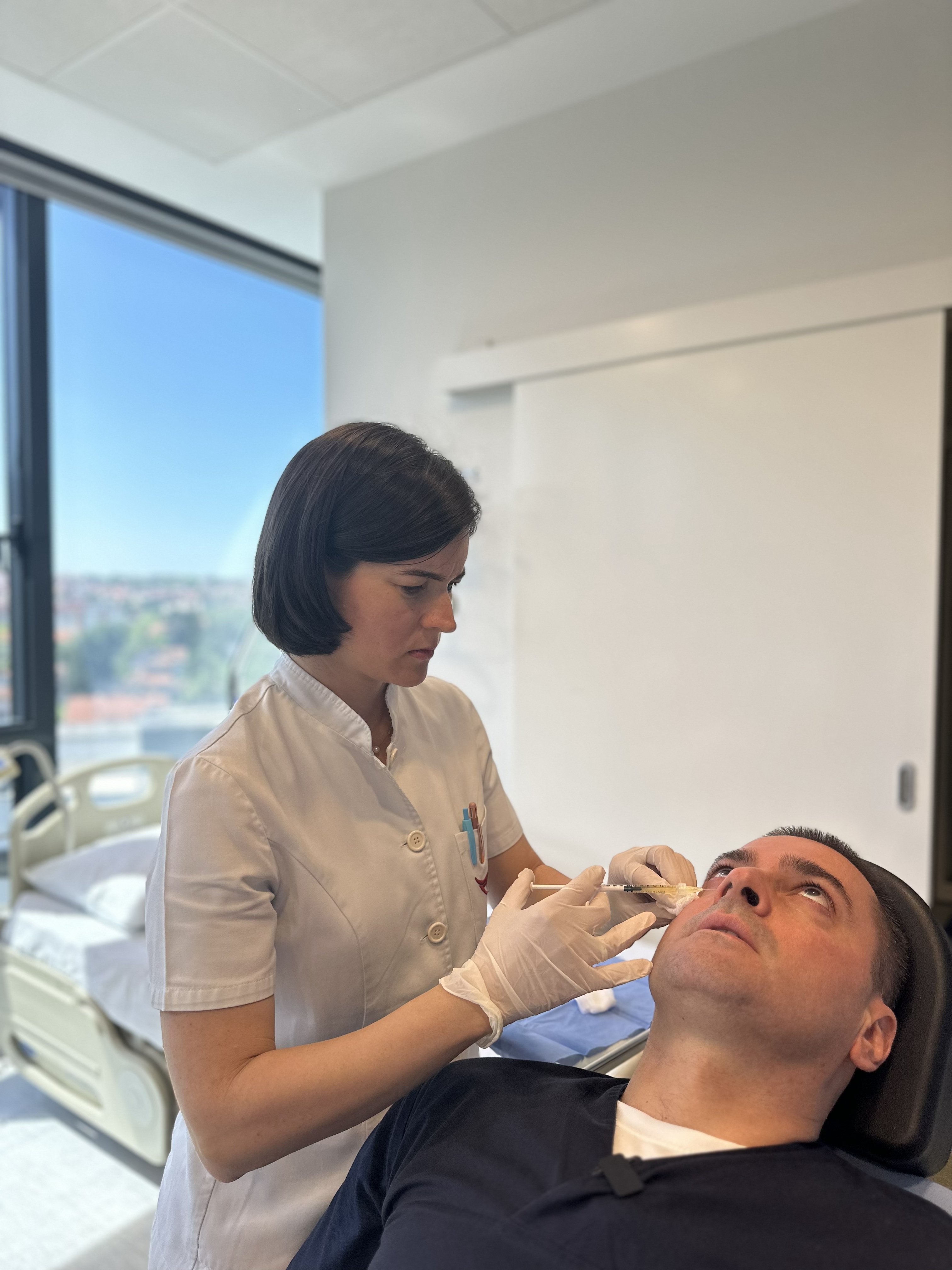
PRP can be applied as drops (a shelf life of 7–10 days, stored at an appropriate temperature) or as a subconjunctival injection that acts as a depot and dissolves over about 20 days. A typical protocol is 3 treatments every 20 days, followed by maintenance doses every 3–6 months. Many patients notice a significant reduction in symptoms within a few weeks.
Troubled by dry eye that won't go away? Book an appointment at Dr Kozomara Hospital to find out whether PRP therapy is right for you.
Gallery
Learn how other people overcame their dependence, and find out how you can, too
Join thousands who have achieved freedom from glasses and contacts