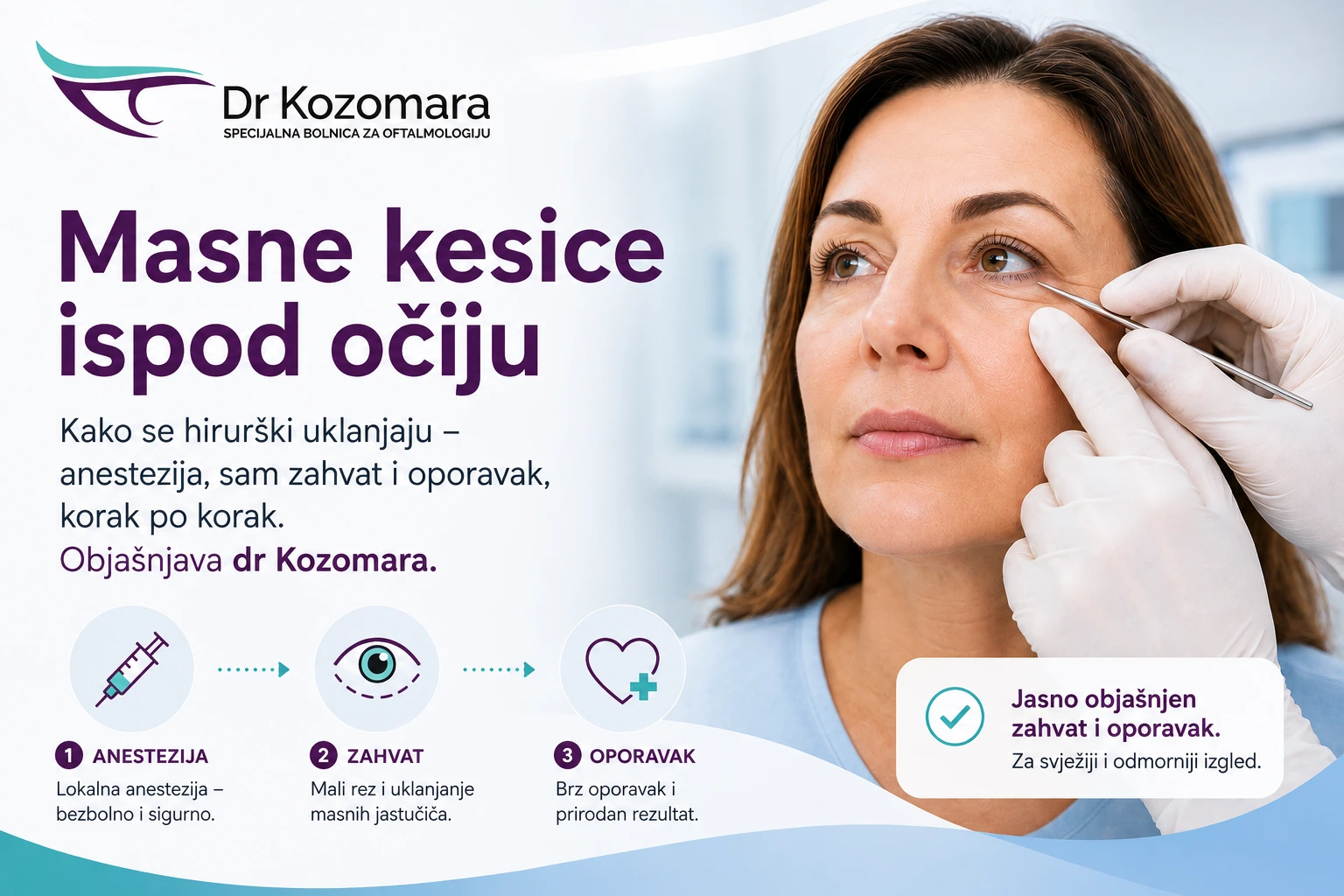
Blepharoplasty
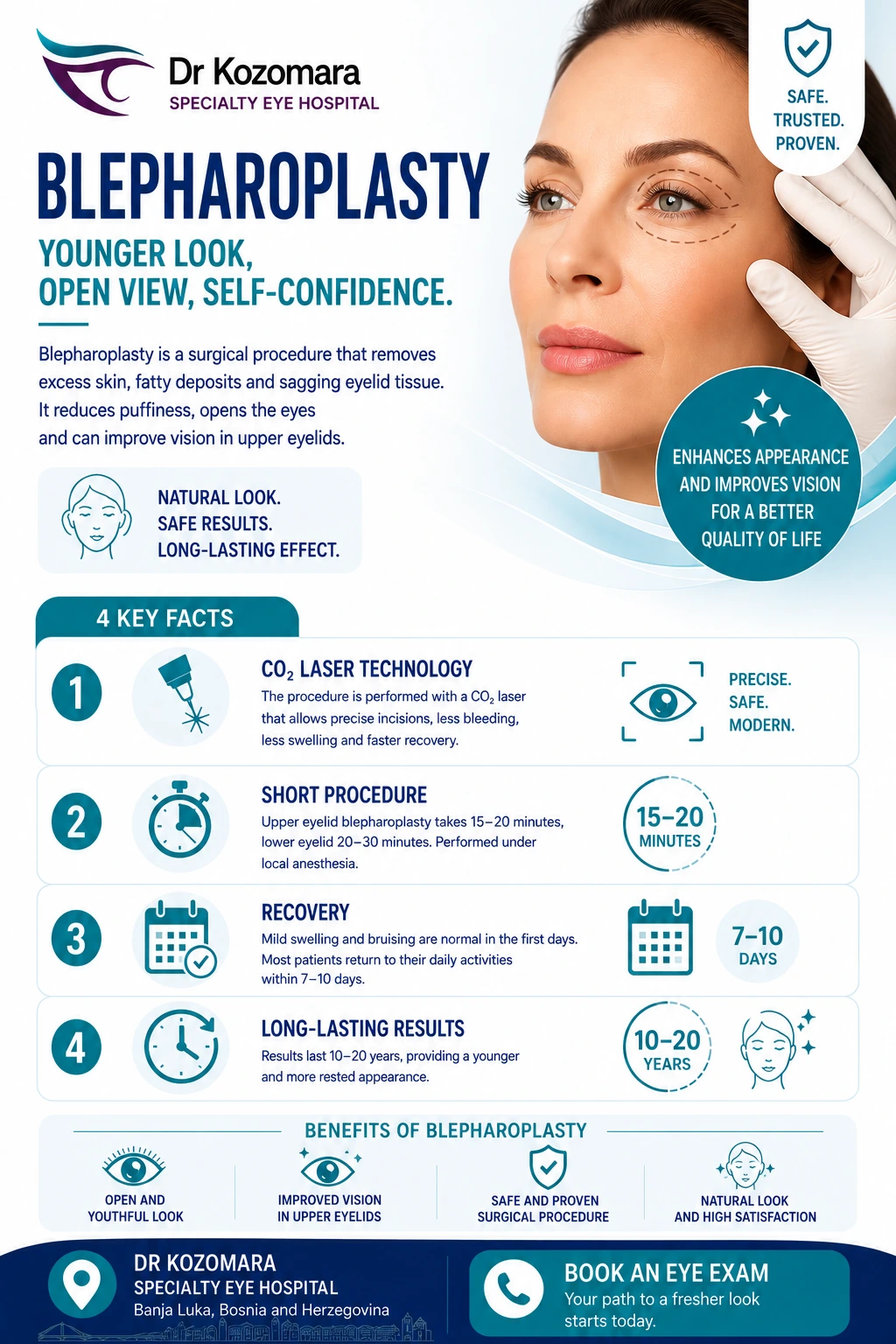
With blepharoplasty you can improve your appearance and your vision. Removing excess skin and fat from the eyelids also relieves the narrowed field of vision caused by "heavy" upper lids — with results lasting 10 to 20 years.
With blepharoplasty you can improve your appearance and your vision. It is an eyelid operation that removes excess skin and fat and, besides the aesthetic effect, in many patients also relieves the narrowing of the visual field caused by "heavy" upper lids.
Anaesthesia
The procedure is most often performed under local anaesthesia. Depending on your wishes and our assessment, analgosedation (light sedation) or general anaesthesia is also possible.
Methods and incisions
Incisions are today most often made with a fractional CO₂ laser, which simultaneously coagulates blood vessels, so there is no bleeding during surgery, swelling is smaller and recovery is shorter. A classic scalpel or an electro-knife may also be used. On the upper lids the incision is made in the skin (an external incision, with sutures), while the lower lids can be operated on through an external incision (skin removal, with sutures) or an internal incision (fat removal, without sutures, healing on its own within 24–48 hours). Sutures may be self-absorbing or removed 7–10 days after surgery.
Functional eyelid corrections
Besides the aesthetic aspect, blepharoplasty also covers functional corrections: ptosis (a drooping upper lid), as well as ectropion (the lid turning outward) and entropion (turning inward), which can cause chronic inflammation, irritation and corneal damage.
How long do the procedure and recovery take?
Upper eyelid surgery takes about 15 minutes and lower eyelid surgery about 20 minutes. The procedure is followed by a short rest with cold compresses, and full recovery occurs within 7–10 days; we advise avoiding exertion for the first two days.
Results, candidates and risks
The effect of the operation lasts 10–20 years. The procedure is most often recommended for people over 45, while younger patients may be candidates if they have functional complaints. Risks are rare and include infection, bleeding, temporary dry eye or a visible scar — but damage to the vision or the eye itself cannot occur, because the eyeball is not approached during the procedure.
Bothered by "heavy" or puffy eyelids? Book a consultation at Dr Kozomara Hospital and find out whether you are a candidate for blepharoplasty.
Everything you need to know about blepharoplasty
Blepharoplasty suitability criteria
Blepharoplasty, or eyelid “rejuvenation” surgery, is the most frequently performed surgical procedure on the eyelids and one of the most common facial cosmetic surgeries.
It is advised as an aesthetic procedure for patients over 45 years of age, as well as for younger individuals who have functional problems due to excess skin on their upper or lower eyelids. In fact, the procedure for cosmetic reasons can be performed before the age of 45, but patients must be prepared that they will probably have to repeat it at least once during their lifetime, as its effect is visible for 10-20 years.
How blepharoplasty works
The procedure itself is completely painless, whether it involves surgery on the upper or lower eyelids. It is performed under local anesthesia, with the application of an anesthetic beneath the excess skin. Sometimes, at the patient’s request, anesthesia can be in the form of analgosedation (“you are dazed, but breathing on your own), as well as general anesthesia (you are completely asleep, and a machine is breathing for you).
Blepharoplasty risks
Possible risks tied to blepharoplasty are:
- Infection and bleeding
- Dry, irritated eyes
- Trouble closing your eyes or other eyelid issues
- Visible scarring
- Harm to eye muscles
- Skin colour changes
- The necessity for another surgery
- Briefly blurred vision
- Risks common to any surgery, like reactions to anaesthesia and blood clots
Blepharoplasty options and alternatives
Upper Eyelid Blepharoplasty
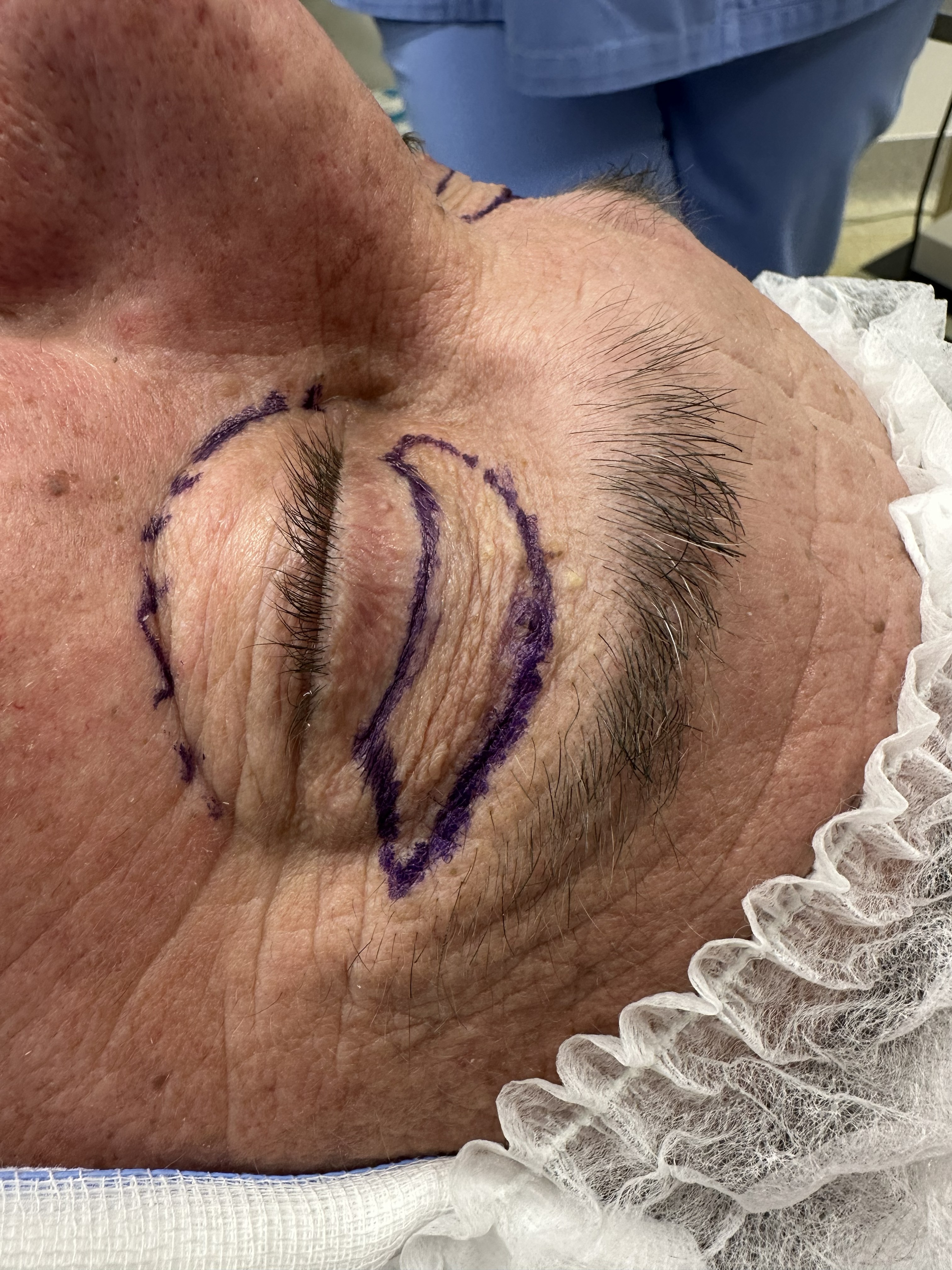
To perform this procedure correctly, the excess skin must be precisely determined and marked. The reason is that the functionality of the eyelid cannot be compromised, i.e., the patient must open and close their eye normally after the surgery. A local anesthetic is injected under the excess skin, and additional anesthesia can be applied as previously mentioned. After removing the excess skin, the wound is closed with sutures that can be self-dissolving and do not need to be removed or those that are not self-dissolving and need to be removed 7-10 days after the procedure.
In the postoperative period, which usually lasts about 7-10 days, the patient is advised to put cold compresses (usually ice) on the eyelids several times a day, and to rest more in the first two postoperative days. Follow-ups after surgery are often not necessary.
Lower Eyelid Blepharoplasty
Ptosis is a medical term that indicates drooping upper eyelids, or eyelids that are not in a normal anatomical position on the eye. If there is a minor degree of ptosis, it is considered only cosmetic, but if the eyelid is so droopy that it covers the pupil and obstructs the vision, it is referred to as functional ptosis. This condition can occur at any age, even at birth, when it is most often referred to as traumatic ptosis that can occur during the delivery. On the other hand, acquired ptosis occurs because of injuries or degenerative changes in the muscles or tendons of the eyelids caused by aging, as well as damage to the oculomotor nerve that lifts the eyelid.
Ptosis (Drooping Eyelid)
Ptosis is a medical term that indicates drooping upper eyelids, or eyelids that are not in a normal anatomical position on the eye. If there is a minor degree of ptosis, it is considered only cosmetic, but if the eyelid is so droopy that it covers the pupil and obstructs the vision, it is referred to as functional ptosis.
This condition can occur at any age, even at birth, when it is most often referred to as traumatic ptosis that can occur during the delivery. On the other hand, acquired ptosis occurs because of injuries or degenerative changes in the muscles or tendons of the eyelids caused by aging, as well as damage to the oculomotor nerve that lifts the eyelid.
Ptosis Correction
Ptosis can only be corrected surgically, regardless of the patient’s age. Depending on the degree of ptosis and the patient’s age, the technique may include shortening the tendon of the eyelid and lifting the muscle or fixing an elastic silicone strap under the skin to the frontal muscle.
Regardless of the technique by which ptosis is corrected, all procedures are performed under local anesthesia, without the need for sedation, except in cases where ptosis is corrected in children when surgery is done under general anesthesia.
The recovery is usually 7-10 days, after which the full effect can be seen.
Ectropion and Entropion?
Due to changes in the structure of the eyelid tissue, usually caused by aging, scarring or innervation disorders, change in the eyelid position can occur as well. These can manifest as turning the eyelid outward (ectropion) or inward towards the eye (entropion).
The onset of ectropion is often accompanied not only by poor eyelid aesthetics, but also by chronic conjunctival irritation (conjunctivitis), and inflammation of the cornea (keratitis).
In contrast to ectropion, entropion involves the inward turning of the eyelid. Patients often complain of eye irritation and vision deterioration which can be caused by damage to the corneal epithelium (epithelial erosion), or inflammation caused by the eyelashes touching the cornea.
Correction of Eyelid Position Disorders?
Surgical procedure in both cases is simple, quick, and effective. It strengthens the eyelid muscles and returns the eyelid to its normal anatomical position.
Regardless of the technique used, all procedures are performed under local anesthesia, and the patient can return to their everyday activities just a few days afterward.
Blepharoplasty steps
- Step 1: We'll administer a local anesthetic to numb the area, ensuring you won't feel any pain during the procedure.
- Step 2: We'll pinpoint the excess eyelid skin which needs to be removed. If needed, we can also perform a brow lift surgery at the same time to achieve a pleasing cosmetic result.
The surgery typically lasts between 20 to 40 minutes.
Gallery
Learn how other people overcame their dependence, and find out how you can, too
Join thousands who have achieved freedom from glasses and contacts
FAQs and information about vision correction
Everything you need to know about our practice and procedures